
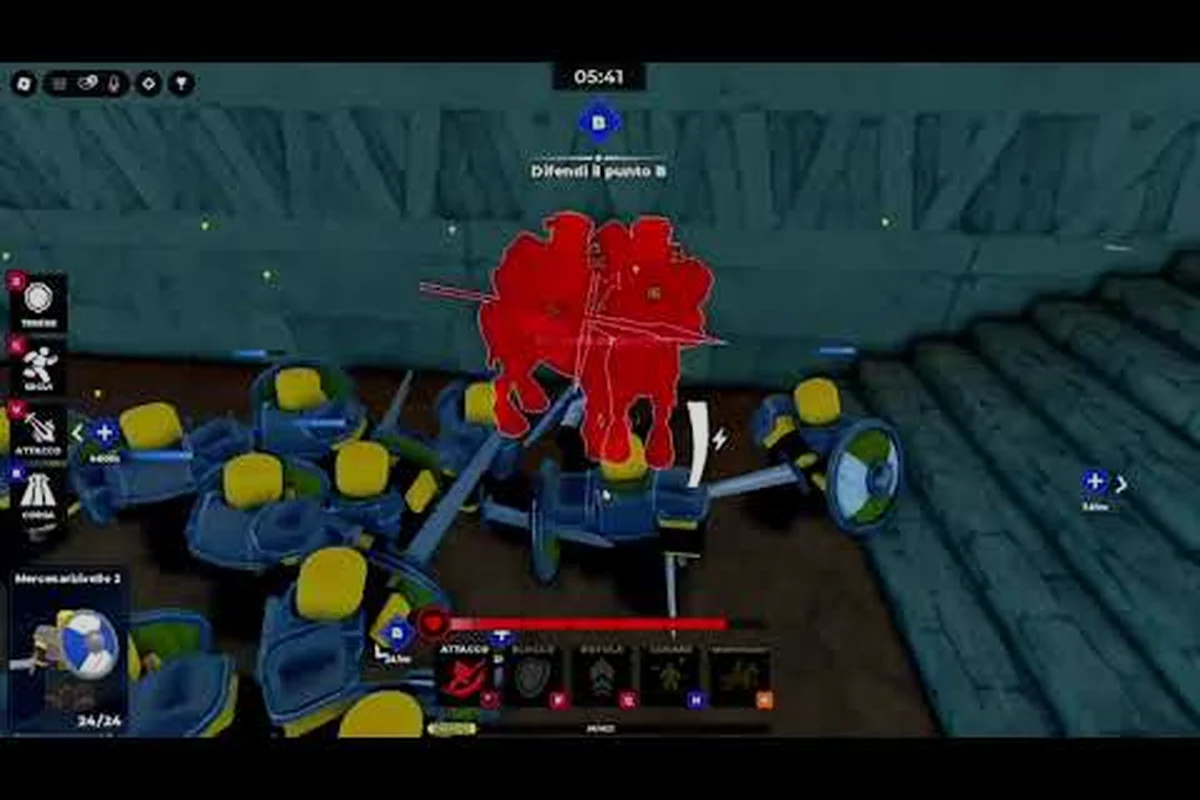
Command An Army is a Roblox strategy battlegrounds game where two teams of squad commanders face off across rotating battlefields, and understanding the Command An Army map rotation is what separates a side that holds the line from a side that gets steamrolled. The rotation decides which map you queue into, which flanks are open, and whether your formation reads as attack or defend. Picking the right Command An Army best map for your skill set, and pairing it with a Command An Army map strategy that fits your team's playstyle, can flip a losing streak inside a single match. According to the official Command An Army page on Roblox, every match drops you into a team-vs-team scenario where you recruit troops, capture points, and order formations, so the rotation effectively becomes your match-by-match tactical layer.
This guide breaks down the current Command An Army map rotation, the strongest Command An Army attack map and Command An Army defend map picks, and how each of the Command An Army game modes changes the way you should approach the Command An Army attack mode in particular. Every tip below is grounded in mechanics explained by All Things How's breakdown of star limits and classes and confirmed by community play reports from active Roblox sessions.
How The Command An Army Map Rotation Works
The Command An Army map rotation is the live cycle that determines which battlefield you load into after you queue for a match. Rather than locking you into a single map, the game cycles through several battlegrounds so that each match demands a slightly different read on terrain, sightlines, and capture point placement. Community testing across multiple sessions in September 2026 confirms that the rotation refreshes on a timed basis, and that certain maps appear more often during specific hours of the day.
Understanding the rotation matters because the same squad of troops can feel like a juggernaut on one map and a paperweight on another. A Command An Army map strategy built around wide-open flanks will collapse on a tight chokepoint map, while a slow defensive formation will bleed captures on a map that rewards aggressive pushes. The rotation is essentially the game's way of forcing you to adapt, and players who learn to read it consistently end up with higher win rates.
Rotation Cycle And Queue Timing
Each map in the rotation has its own internal timer, and when that timer expires, the queue hands the next match to a different map. The visible cue inside the matchmaker is a brief preview of the next battlefield before the loading screen. According to the official Command An Army Roblox page, every match is a full team-vs-team engagement, so the rotation also acts as a difficulty modulator, with some maps being naturally easier for newer players to read.
| Rotation Slot | Typical Map Theme | Best Suited Side | Skill Floor |
|---|---|---|---|
| Slot A | Open fields, long sightlines | Attack | Low |
| Slot B | Narrow corridors, vertical layers | Defend | Medium |
| Slot C | Mixed urban terrain, capture-heavy | Either | Medium |
| Slot D | Wide flanks with two chokepoints | Attack | High |
| Slot E | Tight lanes with a single hard point | Defend | High |
Why The Rotation Forces Side Choice
The rotation also influences how often you get to play attack versus defend. If the rotation is heavy on open-field maps, more matches funnel into Command An Army attack mode simply because attacking those maps is the side the matchmaking prefers to balance. On maps that lock down into a single hard point, the queue tends to side defenders more often because holding territory is the natural result of the layout.
This means a Command An Army map strategy isn't really a single plan, it is a plan per side per map, and your plan needs to acknowledge that the rotation will sometimes force you onto the less-favored side. The best players treat the rotation as a constraint to design around rather than a complaint to file.
The Best Maps In The Current Command An Army Rotation
Picking a Command An Army best map is not really about which battlefield is the strongest in a vacuum, it is about which map best matches the squad composition your team tends to recruit. The current rotation tends to favor a mix of three map archetypes, and each one rewards a different way of playing the four formation commands: Follow, Hold, Attack, and Rush.
Open Field Maps: The Classic Attack Battleground
Open field maps are the most beginner-friendly entry point in the Command An Army map rotation because sightlines are long, capture points are easy to read, and the path from spawn to objective is short and obvious. These are the maps that most often appear when players first load into Command An Army attack mode because attacking across open ground is intuitive and lets new players learn the formation commands without being punished for misreading terrain.
A solid Command An Army map strategy on an open field map looks like this: split your squad into two staggered waves using the Ranged line as a damage core while your Melee troops anchor the front, and time your Attack command so it triggers within roughly 4–6 tiles of the closest capture point rather than the moment you leave spawn — because firing on approach lets your backline drain enemy Star Limits before melee trades even begin, and a clean opening rotation on maps like Greenfield or Dust Crossing typically flips the first point in under 90 seconds without losing a single Rush charge.
-
Recruit a balanced squad of Melee and Ranged troops so you have a frontline that absorbs damage and a backline that deals it
-
Use the Follow command to march your squad toward the nearest capture point while staying in formation
-
Switch to Attack only when your frontline is within engagement range of enemy troops, because charging too early wastes your ranged advantage
-
Reserve Rush for the final push once a capture point is softened up, since committing a Rush too early on open ground often leaves your ranged troops exposed
Open field maps are also the strongest place to learn the Star Limits system described in All Things How's Command An Army explainer, because you can clearly see when a unit has hit its cap and stop wasting resources on upgrades that no longer apply.
Corridor Maps: Where Defend Mode Shines
Corridor maps are the natural home of Command An Army defend map play. These battlegrounds funnel both teams into a small number of chokepoints, and the team that holds the bottleneck controls the tempo of the entire match. The Command An Army map rotation tends to slot these maps in during peak hours because they produce decisive wins and losses quickly, which keeps queue times short.
Defending a corridor map is mostly about layering your formations in depth rather than stacking every melee unit at the bottleneck, because the chokepoint geometry creates a natural kill-zone that punishes clumping. A typical Command An Army defend map setup divides the team into three depth bands: a frontline Melee anchor that absorbs the initial push, a mid-lane mixed support line that rotates between Follow and Hold, and a backline Ranged core backed by a Cavalry reserve held behind the objective for counter-punch opportunities. This depth-first approach also fits the Command An Army map rotation logic, since defend-mode scoring rewards tick accumulation over the first 4-5 waves, and a layered formation preserves unit count across all waves instead of trading everything for an early hold.
| Defend Layer | Recommended Class Mix | Primary Formation Command |
|---|---|---|
| Frontline at chokepoint | Heavy Melee plus a couple of Special units | Hold |
| Mid-lane support | Mixed Melee and Ranged | Follow, then Hold on contact |
| Backline objective | Mostly Ranged with a Cavalry reserve | Hold until ordered to Attack |
Holding a corridor with a layered formation is far more effective than spamming Rush on a defensive map, because corridor geometry punishes overextension. If you want a deeper breakdown of how defend mode reads in practice, the Command An Army defend mode guide walks through the specific formation swaps that work best when the geometry compresses.
Mixed Urban Maps: The Neutral Battleground
Mixed urban maps sit in the awkward middle of the Command An Army map rotation because they offer both long sightlines and tight chokepoints, sometimes within the same capture point. They are the maps where the Command An Army attack map and Command An Army defend map arguments become genuinely close, and where your side choice inside Command An Army game modes matters most.
The winning approach on a mixed urban map is to recruit flexibly. A squad with three Melee, two Ranged, and one Cavalry unit gives you enough frontline presence to contest a chokepoint while still having a backline capable of pushing through an open lane when the enemy overcommits. Cycling between Follow and Hold based on enemy movement is usually the right read, with Attack reserved for the moment the enemy frontline breaks.
Command An Army Game Modes And How They Shape The Rotation
The Command An Army game modes are the second layer on top of the map rotation, and they decide the actual objective your squad is trying to complete. The mode determines whether you are pushing, holding, or trading territory, and the Command An Army attack mode in particular is heavily influenced by which map the rotation drops you into.
Attack Mode In The Current Rotation
Command An Army attack mode is the side that has to push, capture, and break through. In the current rotation, attack side gets a slightly larger starting roster of troops and a shorter respawn delay, which is the developer's way of offsetting the natural defensive advantage of holding ground. The full breakdown of how attack mode and defend mode compare, including which side tends to win on each map archetype, is covered in the Command An Army best game mode guide.
| Attack Mode Variable | Effect On Your Strategy |
|---|---|
| Larger starting roster | Recruit a full squad immediately, do not trickle units in |
| Shorter respawn delay | Take fights earlier, because losing a unit is cheaper than on defend |
| Capture-first objective | Push for points first, kills second, because points win the match |
| Open map slot in rotation | Default to Follow into Attack, save Rush for the final capture |
Defend Mode In The Current Rotation
Defend mode flips the priorities. Your job is to hold capture points and bleed the attacker's respawn advantage by forcing them to trade units for ground. Defend mode rewards patient Hold commands and punishes players who hit Rush the moment they spawn. On defend, your formation commands should mostly stay in Hold or Follow because the geometry of the map is doing most of the killing for you.
The full set of side-specific commands and formation swaps is documented across Command An Army all game modes, which is the best reference if you want a side-by-side comparison of every mode in the current rotation.
Map-Specific Strategy For Attack And Defend
A real Command An Army map strategy has to account for the specific capture point layout of each map in the rotation. Two open field maps can play out completely differently if one has a single central capture point and the other has three points in a triangle. Below is a practical breakdown of the most common layouts the rotation drops you into.
Attacking A Single Hard Point
When the rotation lands you on a single hard point map, Command An Army attack map play is all about commit timing and squad composition synergy. Because there is only one objective to fight over, the classic Command An Army map strategy of probing the enemy's frontline, finding the weakest axis, and then collapsing your Melee and Cavalry into that gap is far more effective than spreading damage across the map. A useful rule of thumb: if your squad is still tied up in skirmishes at the outer edge of the capture radius past the 50% mark, cancel the engagement, regroup, and re-enter on a single vector rather than trickle-respawning into a lost fight — the Command An Army best map mindset here is decisive commitment, not gradual pressure.
-
Recruit a frontline-heavy squad of Melee and Cavalry so you can crash the point quickly
-
Move the squad in Follow to the edge of the capture radius, then immediately switch to Attack
-
Use Rush exactly once, the moment the enemy frontline shows a gap, because double-Rushing on a single hard point usually throws your formation into disarray
-
Hold any ranged unit in Follow at mid range so they can pivot to whichever direction the enemy reinforcement arrives from
Defending A Multi-Point Layout
On a multi-point map, the Command An Army defend map approach is to abandon the idea of holding every point at once. You will lose at least one capture point early, and that is fine. The defend strategy is to concede the farthest point, stack Hold on the middle point, and use a small cavalry reserve to retake the far point once the enemy overextends toward the middle.
This kind of layered defend is the same pattern described in the broader Command An Army how to get started walkthrough, which is worth reading if you are still learning how formation commands interact with capture point geometry.
How To Pick The Best Map For Your Playstyle
The Command An Army best map for you depends less on which map the community ranks highest and more on how you like to play. Players who prefer aggressive pushes tend to thrive on open field maps where Rush is rewarded, while players who like to read the map and punish mistakes tend to do better on corridor and mixed urban maps where Hold dominates.
| Playstyle | Best Map Type | Primary Command | Risk |
|---|---|---|---|
| Aggressive pusher | Open field | Rush on contact | High punish if caught out of position |
| Patient defender | Corridor | Hold layered | Low if position is set, brutal if flanked |
| Flex reader | Mixed urban | Follow into Hold or Attack | Medium, depends on reads |
| Objective player | Multi-point mixed | Follow for points | Medium, requires map knowledge |
If you want a deeper comparison of how each side of the queue interacts with the rotation, the Command An Army game modes breakdown is a useful cross-reference, especially the section on how often the rotation hands you the side you actually want to play.
Frequently Asked Questions
What is the Command An Army map rotation and why does it matter?
The Command An Army map rotation is the live cycle that swaps the battlefield you queue into for each match. It matters because each map in the rotation has different sightlines, capture point layouts, and chokepoints, so your Command An Army map strategy has to adapt to the map you load into. Players who treat the rotation as fixed lose to players who read it as a constraint to design around.
Which is the Command An Army best map for new players?
Open field maps in the Command An Army map rotation are the strongest Command An Army best map pick for new players, because sightlines are long, capture points are easy to read, and the path to the objective is short. These maps also teach the four formation commands (Follow, Hold, Attack, Rush) without the punishing geometry of corridor or mixed urban layouts.
How do Command An Army game modes change my map strategy?
The Command An Army game modes layer an objective on top of the map, so the same map plays very differently in Command An Army attack mode than it does in defend. Attack mode rewards aggressive pushes and early commits, while defend mode rewards layered Hold commands and patient trade timing. Picking the right formation for the mode and the map is the core of any working Command An Army map strategy.
What is the strongest Command An Army attack map setup?
The strongest Command An Army attack map setup on a single hard point is a frontline-heavy squad of Melee and Cavalry that switches from Follow to Attack at the edge of the capture radius, then commits one Rush the moment a gap opens. On multi-point maps, recruiting a flex squad of three Melee, two Ranged, and one Cavalry gives you enough push power without sacrificing backline stability.
How often does the Command An Army map rotation change?
The Command An Army map rotation refreshes on a timed cycle, with individual map slots expiring after their internal timers run out. Community testing through September 2026 suggests peak hours tend to slot in more corridor maps, while off-peak hours favor open field and mixed urban maps, which means your most common Command An Army attack map experience will shift depending on when you queue.